What the Jalen Hurts Matter Can Teach Every Employer
When a new colleague asked for my thoughts on the Hurts matter from an employment law perspective, I had to look it up. Despite my experience working in minor league professional sports, National Football League (NFL) news is not part of my regular reading. But as I read, Hurts’ story became far too relatable.
I have direct personal experience with the deceptive nature of blood clots. Approximately one week after fracturing my fibula during a 5K in 2024, I developed the telltale symptoms of a deep vein thrombosis (DVT):
- Calf tightness
- Localized heat
- Swelling
Not having access to elite NFL physicians, I went to an emergency room in Norfolk, Virginia. There appeared to be little deliberation or hesitation. I underwent an ultrasound, which confirmed the blocked vein, and I was prescribed (ridiculously expensive) therapeutic blood thinners (that I had to fight for several days to get affordably). I was also told not to fly or travel long-distance for a few months.
This is why the timeline surrounding Hurts’ DVT concerns me. It appears to be textbook case of systemic workplace failure, something I have been studying for decades and wrote about in Unsustainable: Why Our Workplaces Aren’t Working and What to Do About It.
I don’t have to look far for more examples, as the Hurts matter demonstrates.

The Jalen Hurts Timeline
On October 4, 2026, Hurts took a direct hit to his calf from an opponent’s cleat. It appears everyone thought he was relatively fine. They presumably though something along the lines of, “It’s football. Players are tough. They take hits like this all the time. We’ll address whatever shows up, if it does.” Then, it did.
Slow Healing
Four days later, Hurts went to the Philadelphia Eagles trainers because rest had not improved his calf soreness. He continued to practice and traveled to London with the team. A typical flight from Philly to London is around seven hours.
Objective Testing
In London, Hurts underwent an ultrasound, which revealed a superficial blood clot. Unlike mine, which was deep by the time of my ultrasound, he had a clot sitting in the veins near the surface of his leg. For an average person like me, an isolated surface clot would probably be treated conservatively. But Hurts is an elite athlete who works in a high-impact environment. So, there is a question of whether his “SVT” should have been treated more like a DVT, or at least a potential one.
Risk Analysis
Regardless, the Eagles medical staff and London medical consultants cleared Hurts to start in the game there against Jacksonville. They assumed movement would improve the blood flow. However, that is often advice given to sedentary patients to avoid stiffness. Subjecting an active clot to hard hits in an elite NFL game can mechanically pump even a SVT straight into the deep veins. Following hits in that environment by an eight-hour international flight back to Philadelphia invites even more risk due to hours of cabin pressure changes, dehydration, and forced immobility.
Risk Tolerance
As someone who has been helping organizations manage risk for most of my professional career, many alarms are going off and red flags popping up. I understand that different people have different risk tolerances, but much tells me (understandably with the benefit of hindsight) the Eagles were taking a huge risk with Hurts’ life and career in exchange for the benefit of him playing in one game overseas. I’m not sure the cost-benefit analysis was well-performed, if it was done at all.
Notable Error
By the time follow-up surveillance imaging was completed back in Philly, Hurts’ blood clot had broken free, traveled into his deep veins, and lodged in the vessels of both lungs. Finally, he was given blood thinners, but he is now sidelined. His prognosis for a full recovery is strong, but many of us believe the clot should never have been allowed to progress into a life-threatening pulmonary condition.
The Myth of “Heroic Resilience”
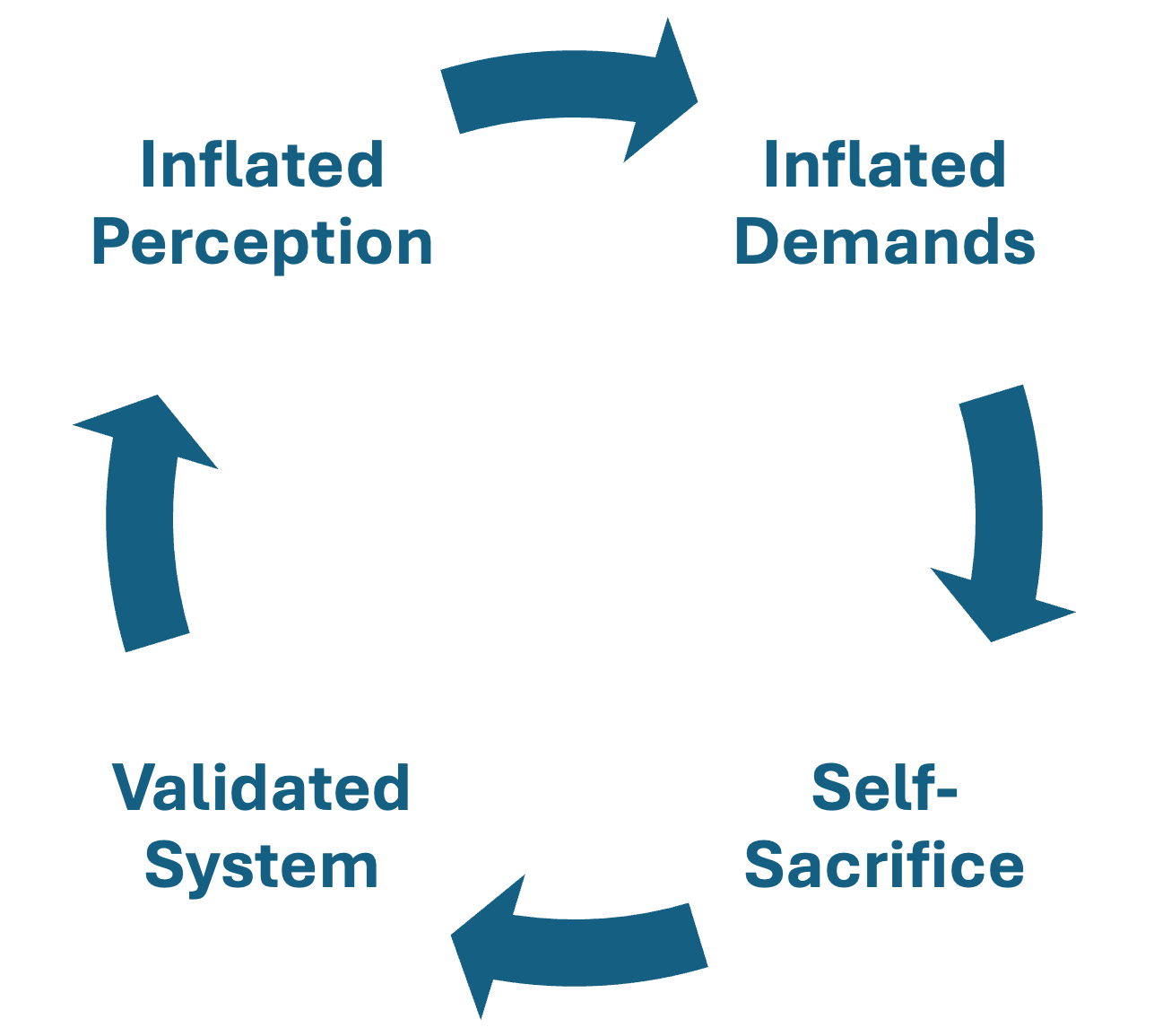
In my upcoming book, Unsustainable, I examine the Doom Loop of Self-Sacrifice that too many organizations fall into. Systems in every industry and profession rely on individual heroic resilience:
- In law firms, trial attorneys pull 80-hour weeks, ignoring migraines, chest tightness, and severe exhaustion to meet court deadlines and respond to opposing counsels’ zealous advocacy.
- In hospitals and clinics, physicians and nurses push past acute physical distress during grueling shifts because “the floor is short-staffed” and “lives are at risk.”
- In funeral homes, funeral directors work around the clock during peak loss seasons, ignoring chronic health signals to ensure grieving families are served.
- In social work and community services, case workers absorb immense secondary trauma and physical fatigue because vulnerable clients are on the line.
The desire to make a difference often overshadows self-care, and organizations normalize “powering through.” This creates an unspoken conflict between human well-being and professional duty. Over time, this pressure causes fractures that can lead to catastrophic loss.
The Legal and Structural Exposure
In the Hurts matter, conflicting interests compounded the fractures:
- Team Owners: Owners want returns on their investments (ROI) in players. If they are paying them salaries, they want them on the field.
- Team Medical Experts: Team doctors and medical evaluators want to preserve their relationships with NFL teams. In theory, they are independent experts, but they often depend on the relationships and defer big decisions to team leaders.
- Jalen Hurts: Players know there are many players seeking their jobs and that getting back to work protects them.
Repairing the Fractures in Any Organization
The investigation requested by the National Football League Players Association (NFLPA) was a wise move to explore where the conflicting interests caused the fractures and how to repair them to reduce future harms. The HAQ Standard can help:
- Humane: Insulate safety decisions from operational demands. Return-to-work and accommodation decisions should never be made by the managers responsible for hitting production goals, winning trials, or staffing shifts.
- Affordable: Foster open communication for raising red flags. Employees and outside experts must feel safe reporting concerns without risking their professional standing.
- Quick: Ensure decision-makers have the knowledge, authority and psychological safety to stop high-risk work when a critical indicator appears. Mandate objective evaluation before work resumes.
We must design systems that consider human fallibilities and balance conflicting interests.
Address the system before it costs you BIG
Your Monday Morning Action
Before the workweek begins, take 30 minutes to review where your organization might be leaning on employee grit instead of clear operational safeguards:
- Is someone collecting risk data?
- What are the common risks in workplaces like yours?
- How are reports of hazards, accidents, and injuries handled?
- Who holds clearance authority?
- Do employees feel psychologically safe to raise a red flag without fear of retaliation?
If speaking up feels like letting the team down, your system is high-risk and running on borrowed time. Take one protocol that currently depends on individual willpower and replace it with a structured, humane process.