What the Title IX Process Gets Right, Gets Wrong, and Was Never Designed to Solve
I have tried to keep quiet about the Cornell 7 Case. I am physically sickened by the allegations that Cornell University conducted a Title IX investigation into what seemed like a case of gang rape and only lightly disciplined some of the students involved. For reasons we are slowly discovering, local prosecutors chose not to pursue a criminal case.
As a survivor of rape, assault, and abuse, I understand this risk is why victims don’t report the crimes. Yet I have also been a Title IX and Equal Employment Opportunity Investigator. I know that there are always facts that the media has not yet shared in our “we told you first” news cycles.
I’m also annoyed by people who claim “guilt and complicity look a lot like silence.” That makes a shareable meme for social media, but it also makes the situation seem clearer and easier than it is. I’m not sure it helps us focus where we need to. The system produces the results it is designed to–even if the design flaw was unintentional.
I feel sad for everyone trying to sort this out. It is not an easy job. These cases can be very complicated and involve a number of intersecting violations of campus policy, as well as criminal law. What many people are seeing as an isolated failure might actually be evidence of a larger systemic problem. That is also fixable.
DISCLAIMER:This post is for educational purposes only and does not express opinions regarding guilt, liability, or responsibility of any individual or institution involved in the pending legal matters. All persons are entitled to due process, and allegations remain subject to investigation and judicial review.
Understanding What a Title IX Investigation Is Designed to Do
Let’s start with a reminder of what Title IX is. First and foremost, it is not a criminal statute.
Under Title IX of the Education Amendments of 1972, universities receiving federal funding have a responsibility to address sex-based discrimination and sexual misconduct that interferes with students’ ability to participate in educational programs. That’s a lot of fancy language effectively saying if you take federal money, you have to make sure you protect students’ civil rights.
Higher Education institutions are required to:
- Gather facts fair and impartially
- Assess credibility objectively
- Evaluate policy violations
- Recommend appropriate institutional responses
- Protect educational access and safety
Again, a Title IX investigation is not a criminal prosecution. Investigators are not determining whether someone should go to prison. No university has that direct, enumerated power. Instead, its investigators and administrators determine only whether university policies were violated and what actions the institution should take in response. If they don’t, they can lose their federal funding. They can also be sued in civil court. Only prosecutors decide whether the criminal case goes forward.

Remaining Neutral Throughout the Investigation
I have conducted many workplace and campus investigations. I also regularly see the results of the ones that were poorly conducted. In the worst ones, the investigators functioned as though they were attorneys trying to persuade administrators with a compelling story that justified their recommendations. That is not how fair and impartial investigations occur.
This is often one of the earliest fractures in the system, and it compounds when administrators can’t recognize the errors. Worse yet, they act on them–because the system does not account for human fallibilities.
It takes specialized training and intentional practice to remain genuinely fair and impartial throughout the investigation process. Not everyone with Title IX knowledge has these skills, which makes recruiting and retaining qualified professionals especially challenging. The Title IX Coordinator position consistently experiences high turnover throughout higher education. The work is emotionally exhausting, politically charged, legally complex, and often under-resourced. Not surprisingly, these conditions invite costly errors. To deal with these pressures, investigators need:
- Courage
- Training
- Practice
- Self-awareness
When was an on-campus Title IX Investigator, I occupied a somewhat unique position. I was a part-time university employee with a full-time law and mediation practice. That gave me insulation from the internal pressures. Yet even with my extensive professional training and work as a neutral, I sometimes needed to consciously set aside my biases and premature conclusions during investigations. When necessary, I checked my assumptions with the Title IX Coordinator and confidential advisors. After completing my investigation, my reports were reviewed by them and additional administrators–each of whom had their own personal and professional interests.
Even with protections in place, I can see how easily the system can break down.
Fracturing Under the Pressures
Most people assume failures occur because someone intentionally ignored evidence. That sometimes happens. More often, the failures are more subtle and therefore harder to identify. Any investigation process can be complicated by:
- Vacant positions
- Excessive caseloads
- Burnout
- Confirmation bias
- Competing institutional interests
- Fear of legal liability
- Public relations concerns
- Financial pressures
- Organizational politics
In other words:
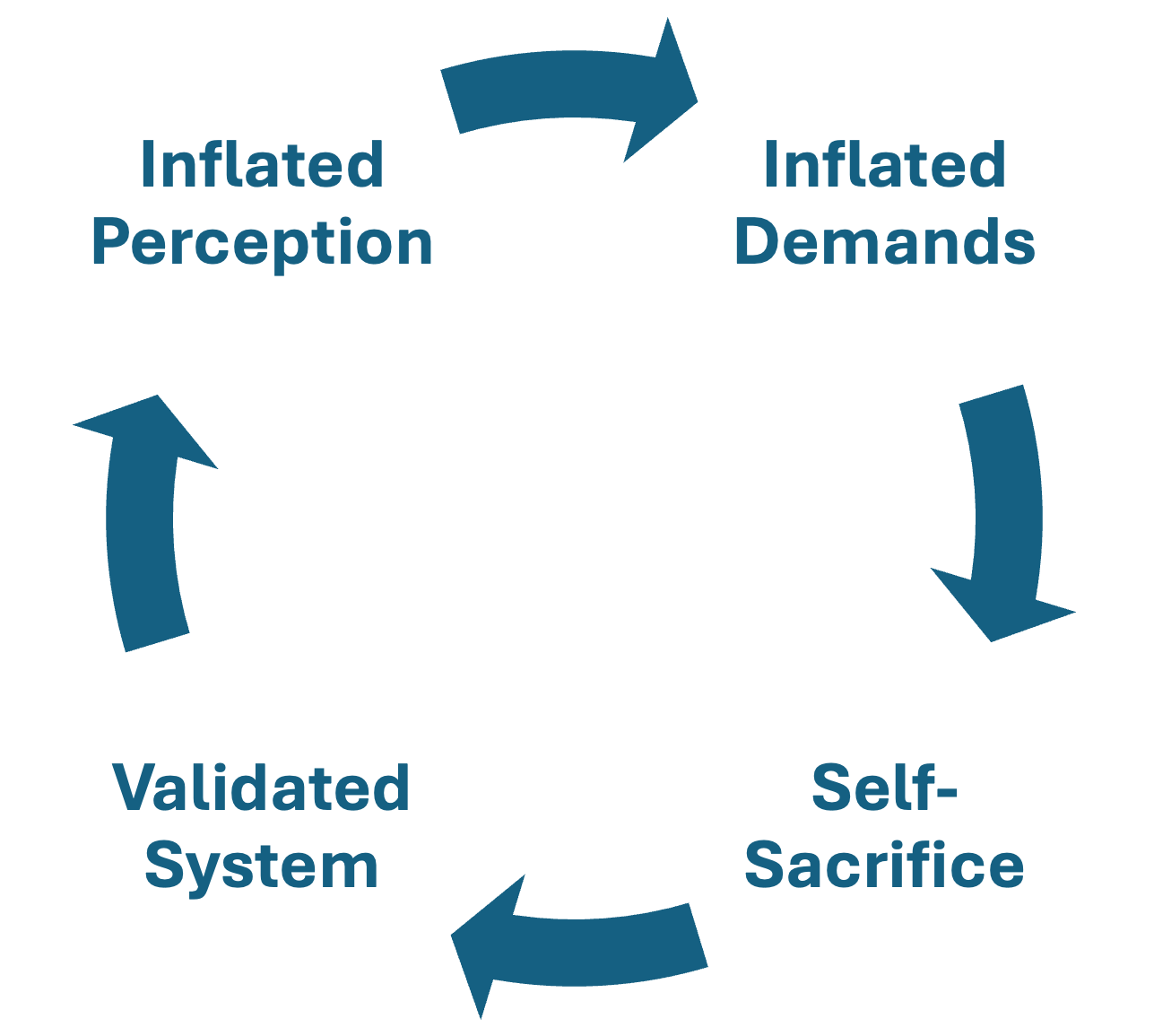
The Title IX system depends heavily upon human beings operating flawlessly under extraordinary pressure. That is a risky design.
Assumptions Embedded in the System
What concerns me most is that many institutions continue to rely on assumptions that experience repeatedly proves untrue.
The system often assumes:
Assumption 1: Administrators Will Make the Right Choices When Presented with Sufficient Evidence
Evidence alone does not make decisions. People do, and these people bring to every decision-making process:
- Competing priorities
- Blind spots
- Fears
- Personal interests
- Biases
We need to build better controls to limit the harm these can cause.
Assumption 2: Administrators Can Successfully Balance Multiple Competing Interests
University leaders must consider many competing interests that cannot always be reconciled easily:
- Student safety
- Institutional reputation
- Legal exposure
- Donor relations
- Enrollment concerns
- Faculty interests
- Public scrutiny
We need guidance that can help administrators find balanced solutions more quickly.
Assumption 3: Employees Feel Safe Speaking Up
Many Title IX processes rely on employees to identify concerns, challenge questionable decisions, or escalate issues. Yet psychological safety is not evenly distributed within organizations. Despite legal protections, employees often fear retaliation. Without adequate protections, people remain silent to protect their careers and opportunities.
Assumption 4: Humans Can Always Recognize the Right Choice
This may be the most dangerous assumption of all. We tend to believe that once the facts are known, the “right” answer becomes obvious. After hundreds of trials, I can tell you that is untrue. Research in psychology, conflict resolution, and organizational behavior consistently back me up on this.
Human beings frequently disagree about facts, meaning, fairness, responsibility, and accountability, even when reviewing the same evidence.
The Conversation We Should Be Having
Too often, discussions about sexual assault become polarized. One side argues for harsher punishments. The other argues for stronger due process protections. Both are important. Neither addresses the deeper issue.
The question is not simply whether we can identify individual wrongdoing after harm occurs. The bigger issue is why institutions continue producing outcomes that leave so many people believing justice was unavailable through normal channels.
This is not merely a legal question, but a human one. It requires systems-design thinking from leadership and trust from those being lead:
When people must repeatedly force a system to do what it was designed to do, that suggests the system is not operating as designed.
Concerned about an investigation?
Your Monday Morning Action Step
Conflict resolution breakthroughs rarely begin with “fixing” people. Stop looking at them as broken and focus on helping them fulfill their potential. The sustainable change you want comes from redesigning systems that were never equipped to handle people as they really are. This week, choose one system in your organization, family, community, or business and ask:
What assumptions is this system making about human behavior?